Guide
Running shorts, explained: inseam, liner, pockets and the fabric that dries by lunch
The inseam is the one number you feel on every stride, the liner is the choice runners never agree on, and the pocket is where the range began. Here is how each is chosen, with the running bench counted length by length.
Published 6 September 2026 · 14 minute read · sources read 6 September 2026
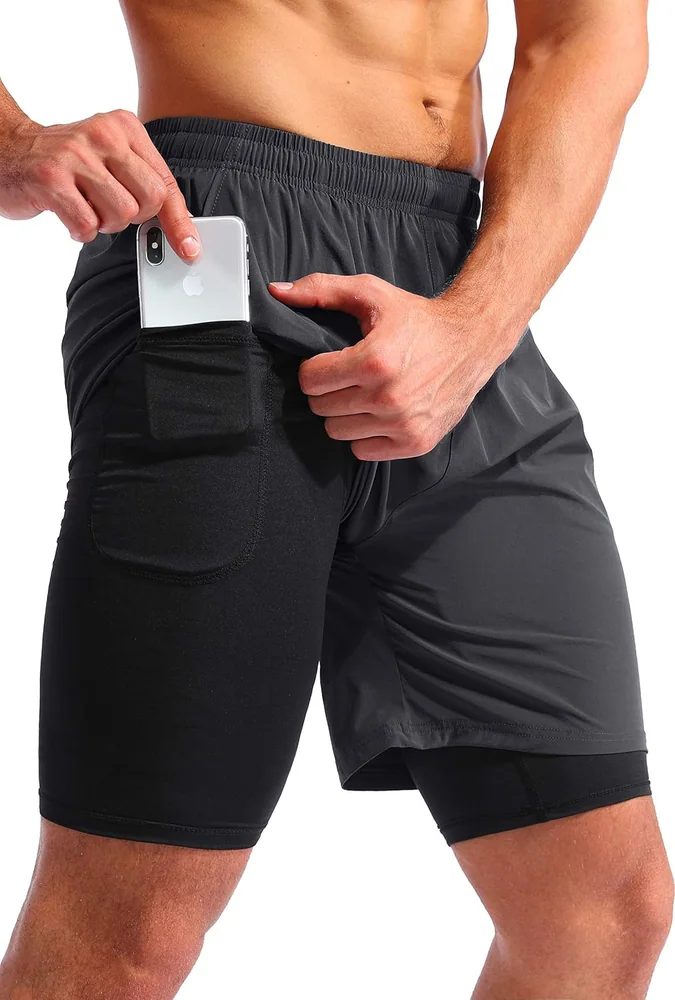
Pictured
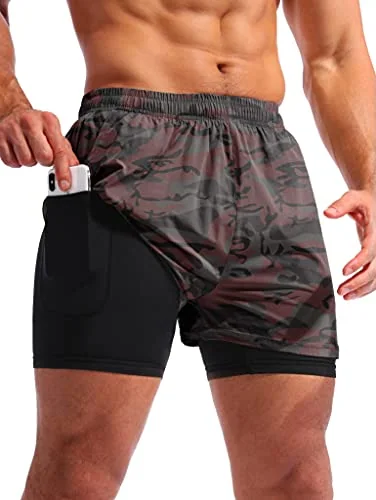
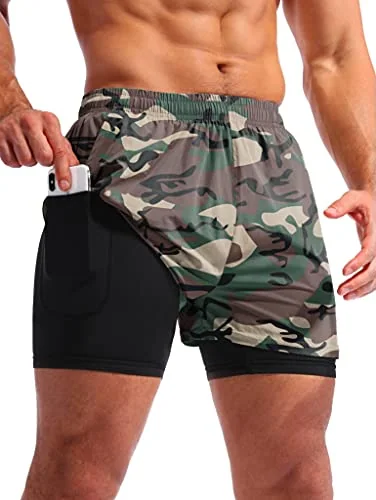
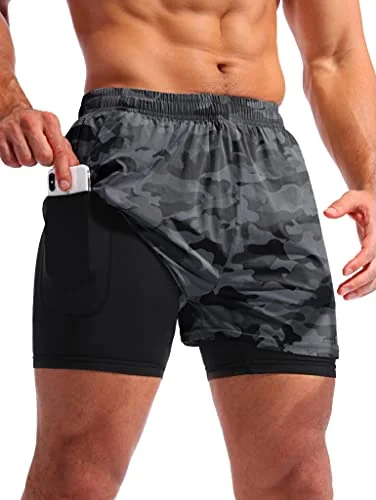
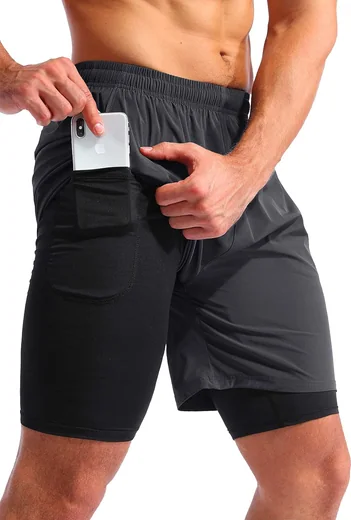
Men's 7-Inch 2-in-1 Running Shorts, Dark Grey
The pair this guide keeps coming back to: a 5 inch inseam, a knit liner and a zip pocket on the hip, in the colour with the most ratings on the bench.
Start with the piece
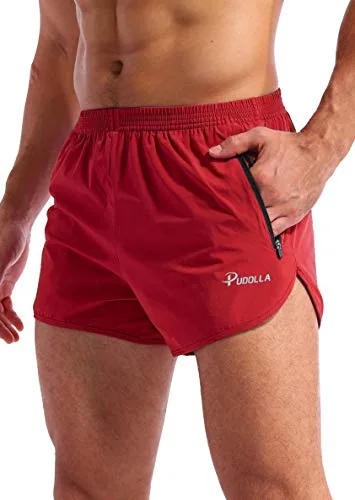
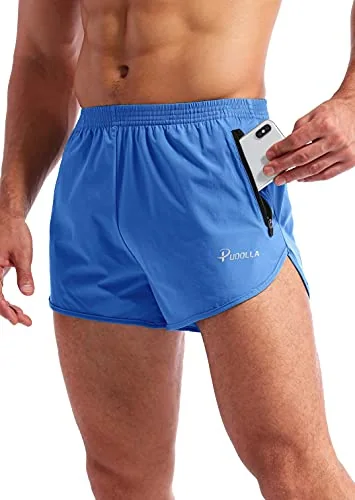
Pudolla running & gym shorts this guide is about
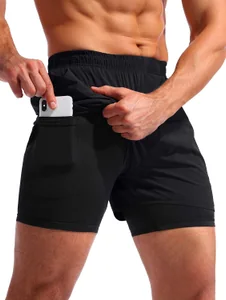
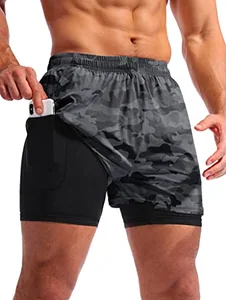
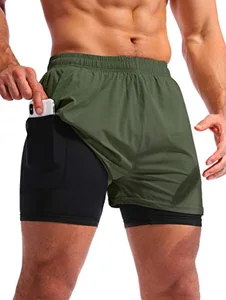
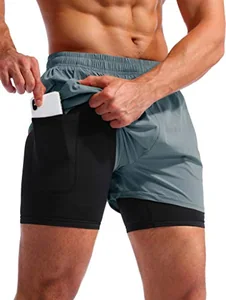

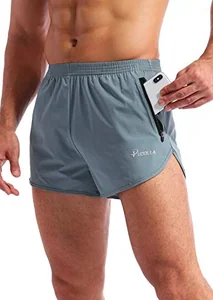
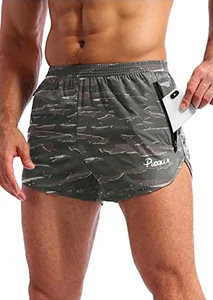
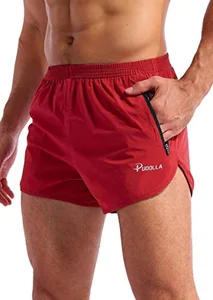
Why the inseam decides everything
The inseam is the seam that runs from the crotch to the hem on the inside of the leg, and its length in inches is the one number on a pair of running shorts that you feel on every stride. A 3 inch inseam ends high on the thigh and never touches the knee. A 9 inch inseam brushes the kneecap on a deep step. Between those two numbers is everything else about how a short behaves: how much it swings, how much air moves through it, how it looks when you stop running and walk into a shop.
We at Pudolla print the inseam on every card on the running bench, because it is the number people ask about and the number the label buries. The same shell in the same colour is a different garment at 3 and at 7 inches, and the size letter tells you nothing about which one you are holding. This guide goes through the inseams one at a time, then the liner, the pockets, the waist and the fabric, and ends with a five minute way to choose.
Three, five, seven, nine
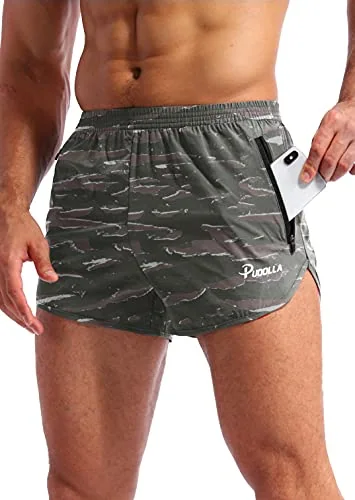
Three inches is the track length. The hem sits high enough that nothing touches the thigh as it lifts, and the whole leg is free. It is the length for speed work, for hot days and for people who have never liked fabric near the knee. It is also the length that shows the most leg, and the reason the 3 inch pairs on this bench are bought for running and rarely for anything else.
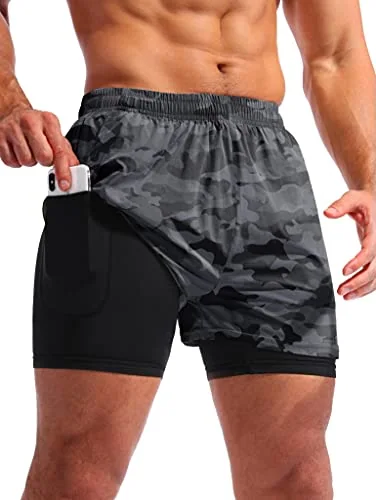
Five inches is where most people land. The hem sits at mid-thigh, the leg still swings free, and the pair reads as an ordinary short when you stop. Our first pair was a 5, and the 2-in-1 version of it, with a knit liner and a zip pocket on the hip, is the most rated piece on the bench. If you are buying one pair for running and do not know which, it is this length.
Seven inches reaches the top of the knee. It is the gym length: enough cover for a squat rack and a bench, still light enough for a run home. The 7 inch pairs carry the same pockets as the 5, and some carry a liner, but the extra fabric means a touch more swing on a fast stride.
Nine inches covers the knee on most people. On the running bench it is the length for a walk, a warm-up and a cooler day, and the pair you wear to a gym where you want the thigh covered. Past 9 inches the pairs live on the hiking bench, where 11 and 13 inch golf and cargo shorts start.
| Inseam | Pages on the bench | With a 2-in-1 liner | With zip pockets | Price range |
|---|---|---|---|---|
| 3 inch | 35 | 35 | 35 | $19.99 to $19.99 |
| 5 inch | 92 | 49 | 92 | $8.99 to $24.99 |
| 7 inch | 46 | 12 | 46 | $8.99 to $23.99 |
| 9 inch | 14 | 0 | 12 | $9.99 to $19.99 |
| not stated | 57 | 4 | 57 | $8.99 to $58.19 |
The counts are from the catalogue at the last update, and they include every size of every colour, so a length that comes in more colours counts higher. The price range is the lowest and highest page at that length.
The liner question
A 2-in-1 short has a second, closer layer sewn inside the shell: a knit brief or a short tight that goes on with the shell and takes the place of anything you would wear underneath. On the running bench 100 pages have one and 2 say on the label that they do not, on purpose.
What the liner does: it holds things in place, it takes the sweat so the shell stays dry, and it means the pair goes on in one movement. On a 5K or a gym session that is the whole job, and the liner does it. What the liner is not: a compression short with a stated pressure. On a long run, or a run where chafing is a known problem, many people still wear a compression short they trust under a 2-in-1, and the shell has room for that.
The liner also decides how the short is washed. A 2-in-1 pair is two layers, and the liner holds water longer than the shell, so it hangs an hour longer and should never go in a hot dryer, where the fine knit is the first thing to pill.
A short without a liner is a different choice, not a lesser one. It weighs less, dries faster because there is only one layer, and it lets you pick your own base. The folks at Pudolla keep both on the bench because the runners in the studio split down the middle, and neither half has ever converted the other.
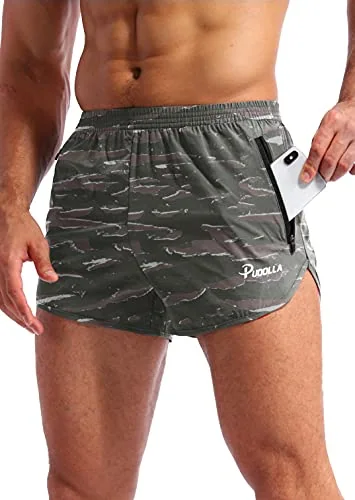
Where a phone should ride
The pocket is where the range began. A phone in an ordinary side pocket bounces against the thigh on every step, and the bounce is enough to end a run early. Our answer was to move the pocket to the hip, give it a zip and cut it to the size of a phone, so the phone sits against the hip bone where the body does not swing.
| Pocket layout | Pages on the bench | What fits | What happens on a run |
|---|---|---|---|
| Zip pocket on the hip | 242 | phone, card, key | the phone stays put on a hard run |
| Open pockets only | 2 | a key, a gel | a phone rides up and out |
| Four pockets or more | 12 | phone, card, key, gel | the most a short can carry without swinging |
The zip pocket on most pairs takes a phone up to about 6.7 inches, in a slim case. A phone in a wallet case is tight, and a phone in a wallet case with cards in it does not go in. The liner pocket, where there is one, is the place for a key or a gel: it is small, it is inside, and nothing in it swings. The open pockets on the pairs that have them are for the walk, not the run.
242 of the 244 pages on the bench have a zip pocket. The card says so under the name, and the page repeats it in the label table.
Waist, drawstring and the hem
Every pair on the bench has an elastic waist, and nearly every pair has a drawstring inside it. The elastic holds the short up, and the drawstring stops it from moving when the pocket is loaded. Tie it. A drawstring left loose is a drawstring that does nothing, and a loaded pocket on an untied waist is the first thing runners write to us about.
The back of the waist sits a little higher than the front on the Pudolla pairs, so the hem stays put when you bend at the start line. The hem itself is cut straight on the 3 and 5 inch pairs and has a small split at the side on some, which is what lets a 5 inch pair move like a 3 on a full stride.
On sizing: take your usual waist letter. If you are between two sizes on a 2-in-1 pair, go down, because the liner is the part that holds and a loose liner holds nothing. On a pair without a liner, go up, because the shell is the only layer and it should not pull.
What the fabric does
The shell on almost every pair is a polyester knit, sometimes with a few percent of spandex where the label states it. The maker calls it quick-dry, and on a fence in the shade a shell is dry in an afternoon. The liner is a finer knit and takes an hour longer. The lounge shorts on the bench are a cotton jersey, which is the softest thing here and the slowest to dry: a day on the line.
| Fabric | Drying | In use | Where it is on the bench |
|---|---|---|---|
| Polyester knit, no liner | dries on a fence in an afternoon | holds a smell less than cotton, more than wool | the everyday pair |
| Polyester shell with knit liner | shell dries first, liner an hour later | the liner takes the sweat | the 2-in-1 pairs |
| Cotton jersey | a day on the line | soft, heavy when wet | lounge shorts, not for a run in the rain |
Quick-dry, breathable and moisture-wicking are the maker's words, and the pages print them as such: no test report is published for the range, and we do not invent one. What we can say from wearing them is that the polyester shells dry faster than any cotton short we own and that the liner is the last thing to dry.
Care is short. Cold wash, zip the pockets shut so the zip does not catch the knit, hang. A hot dryer shortens the life of the elastic and does nothing for the shell.
The bench, counted
Here is the running bench at the last update, by inseam and by what the label says, so you know what exists before you filter. The numbers change when a size sells out or comes back, and the page for each piece is the only place a price is final.
From the bench
Pieces this chapter is about
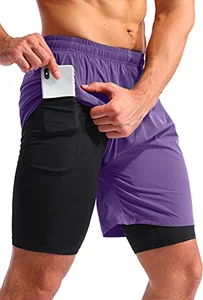
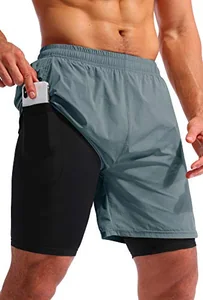
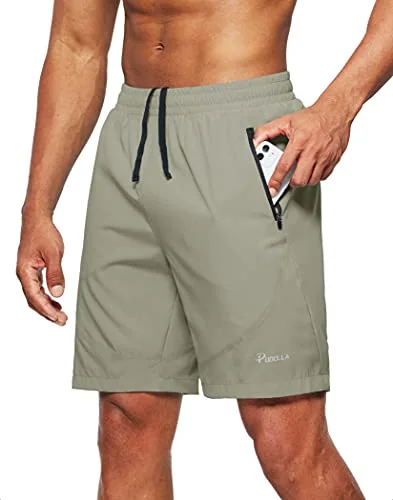
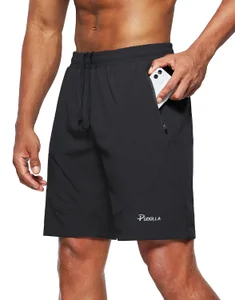
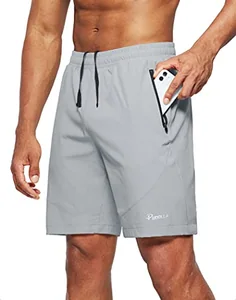
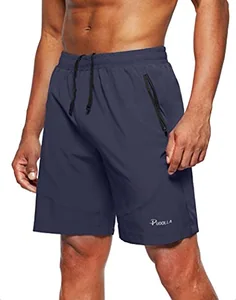
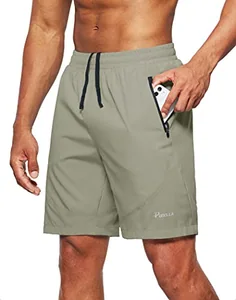
The filters on the bench page work on exactly these facts: who it is for, the inseam, the colour, the size, and whether there is a liner or a zip pocket. Two filters at once narrow the list to what has both.
Hot days and long runs
A short is one of the two things that decide how a hot run goes, and the other is the hour. The public guidance on heat is plain about it.
Do outdoor activities during the coolest parts of the day or evening, if possible.
Centers for Disease Control and Prevention, About Heat and Your Health, read 6 September 2026
Check your urine color. When it's light yellow or clear, it usually means you are drinking enough water.
Centers for Disease Control and Prevention, About Heat and Your Health, read 6 September 2026
On the short itself: for heat take the 3 or the 5 inch pair without a liner, because a single layer dries faster and lets more air through. For a long run in heat take the pair with the zip pocket and carry the phone there rather than in a hand, because a hand that holds a phone does not hold a bottle.
How much running is enough is the other question people ask a shorts brand, and the honest answer is the guideline, not a sales pitch.
Adults need at least 150 minutes of moderate-intensity physical activity a week, such as 30 minutes a day, 5 days a week.
Centers for Disease Control and Prevention, Adult Activity: An Overview, read 6 September 2026
Some physical activity is better than none.
Centers for Disease Control and Prevention, Adult Activity: An Overview, read 6 September 2026
Thirty minutes a day is a 5K at an easy pace, or a walk with a run in the middle of it, and a pair of shorts with a pocket that holds still makes that half hour easier to start. That is the whole of what a short can do for the guideline.
Gym, trail and the walk home
A running short does three other jobs in a week, and each one pulls the choice a different way. In the gym the hem matters more than the weight: a 3 inch pair on a bench press shows more than most people want, and a 7 inch pair covers the thigh on a squat rack and still weighs nothing. The gym is where the 7 and the 9 earn their place on the bench, and where the zip pocket holds a locker key instead of a phone.
On a trail the short competes with the hiking bench, and the difference is the shell. A running short is a knit, light and quick to dry, and it snags on a thorn where a woven hiking short shrugs it off. On a smooth path or a dirt road the running short wins by weight.
On a brushy climb the hiking short wins by not tearing, and its thigh pocket carries a map the running short has nowhere to put. Pudolla makers wear the running pairs on the paths along the river and the hiking pairs in the hills, and the line between them is the first thorn.
On the walk home the short has to pass as clothes. The 5 inch pair does, in a dark colour with the drawstring tucked in. The 3 inch pair does not, whatever the colour, and the 9 inch pair passes anywhere. That is the plainest argument for owning two lengths: a 3 or a 5 for the run itself, and a 7 or a 9 for the days when the run is the middle of something else.
Colour follows the same logic. The running bench comes in black, navy, greys and a handful of brights. Dark colours pass on the walk home and hide a muddy path. The brights are for the track and for being seen on a road at dusk, and a bright pair with a dark liner is the pair the studio takes for an evening run along a road with no path.
Washing, drying and the life of a pair
A polyester short lasts as long as its elastic, and the elastic lasts as long as you keep it out of the dryer. The Pudolla team washes its own pairs cold, with the pockets zipped so the zip does not catch the knit of the next thing in the drum, and hangs them by the waist. A shell is dry in an afternoon. A liner takes an hour longer.
A hot dryer shortens the life of the waist elastic and does nothing for the shell, and a hot iron melts the knit, so neither goes near a pair.
The liner is the first thing to show wear. After a season of long runs the knit thins at the seam, and a thinned liner holds less than a new one. When that happens the pair is still a pair without a liner, and it goes on wearing as one, with a base you already own underneath. The shell outlasts the liner by a year or two on the pairs the team has kept.
Smell is the other thing people ask about. Polyester holds a smell longer than cotton and much longer than wool, and the answer is the same as for any knit: wash it soon after the run rather than the next morning, and hang it wet rather than leaving it in a bag. A pair that has picked up a smell it will not lose comes back after a soak in cold water with a cup of white vinegar, and that is the only trick the studio knows.
What none of that does is change the pocket. A zip that has taken sand from a beach run wants a rinse and a run of the slider a few times under a tap. A zip that has broken is a pair with an open pocket, and an open pocket is a pocket that swings. Treat the zip as the part of the short that is doing the work, because on a run with a phone it is.
What a running short is not
Three limits, and none of them are hidden.
It is not compression wear. A 2-in-1 liner holds things in place. It does not apply a stated pressure to a muscle, and no page on this site claims it does.
It is not waterproof. A zip pocket keeps a phone from falling out, not from getting wet. On a run in the rain the phone goes in a bag or stays home.
It is not a promise about your size. The size row on every page shows which sizes exist in that colour at the last update, and a missing size is a size that is out, not a size that is coming.
How to choose in five minutes
- Pick the inseam first. Track and heat: 3. One pair for everything: 5. Gym and the walk home: 7. Knee covered: 9.
- Decide on the liner. Short runs and the gym, and you want one movement to get dressed: 2-in-1. Long runs, chafing, or a base you already trust: no liner.
- Find the zip pocket. If a phone comes on the run, the card must say zip pockets. If it does not, the phone bounces.
- Take the size the liner wants. Between sizes, down on a 2-in-1, up on a pair without a liner.
- Read the size row. Every size in a colour is its own page with its own price, and the row shows what exists today.
Sources
- Adult Activity: An Overview, Centers for Disease Control and Prevention, read 6 September 2026.
- About Heat and Your Health, Centers for Disease Control and Prevention, read 6 September 2026.
Before you go