Guide
Pants and shorts for the trail: woven or knit, water resistant or waterproof, and the pocket that does not swing
Woven or knit, water resistant or waterproof, a thigh pocket that lies flat or one that swings: the choices that decide how a pair of pants or shorts behaves on a trail, with the public guidance on long pants, ticks and the layer in the pack.
Published 6 September 2026 · 15 minute read · sources read 6 September 2026
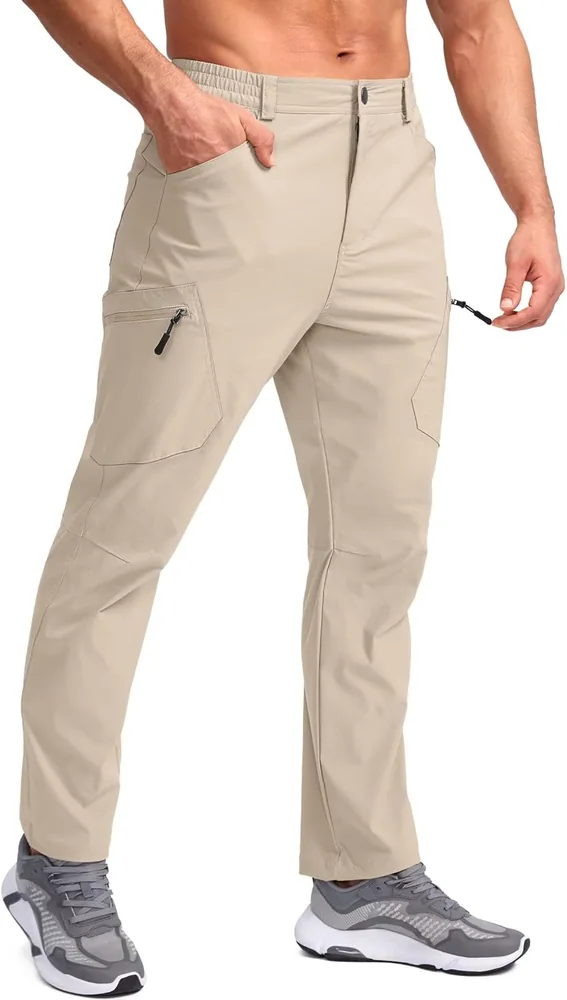
Pictured
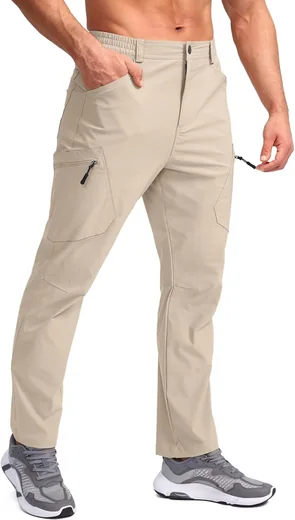
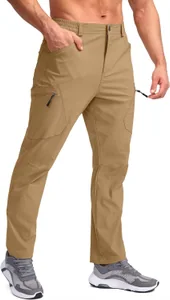
Men's Hiking Pants II, Khaki
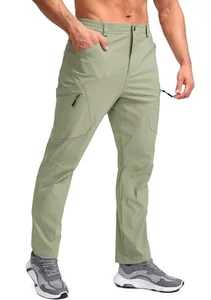
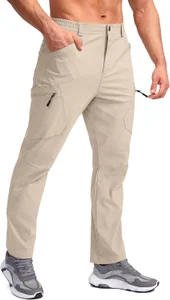
A pair of cargo pants from the bench: a woven shell, thigh pockets that zip, and a waist in inches.
Start with the piece
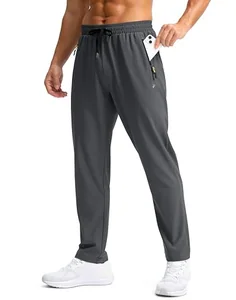
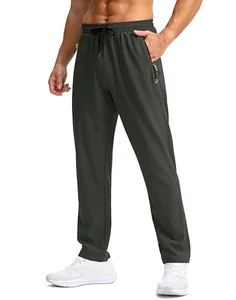
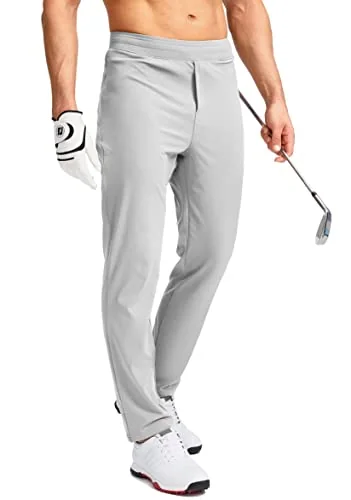
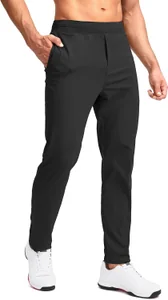
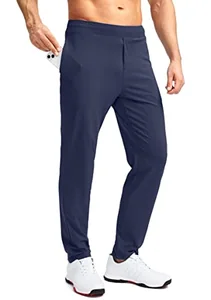
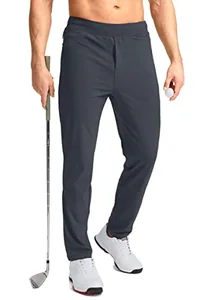
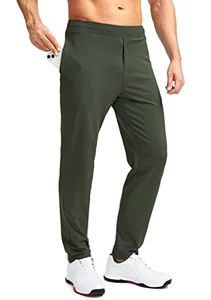
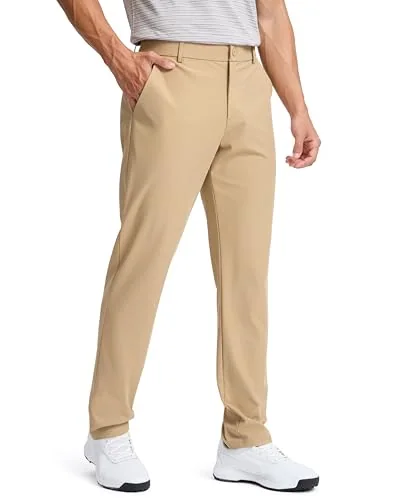
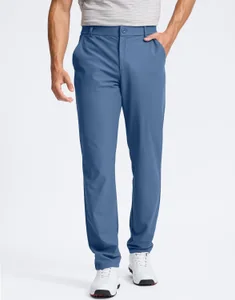
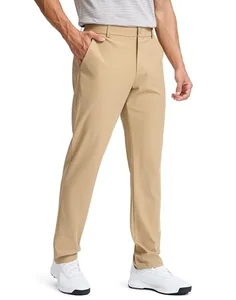
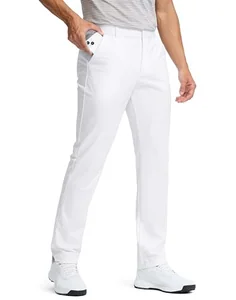
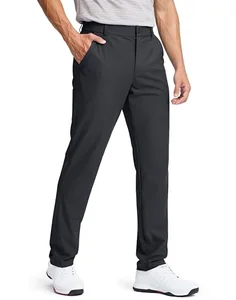
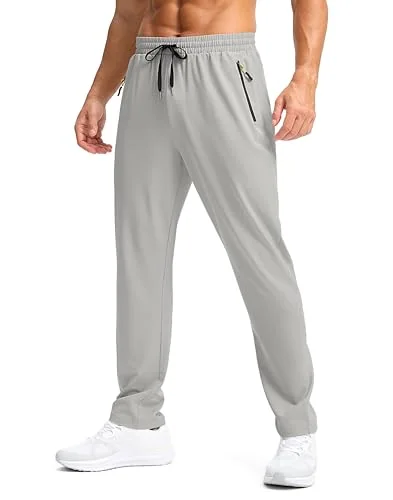
Pudolla hiking, golf & travel pants this guide is about
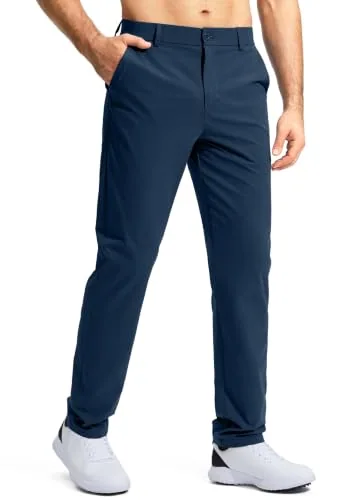
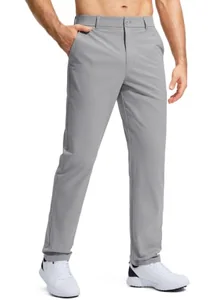
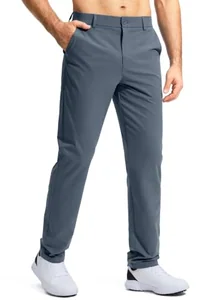

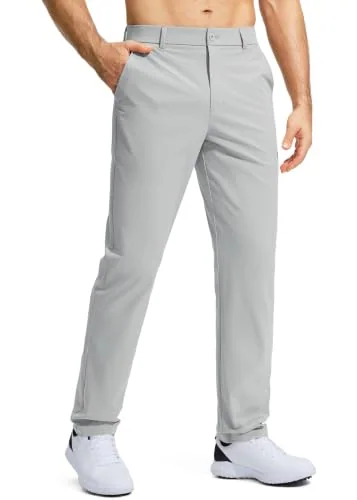
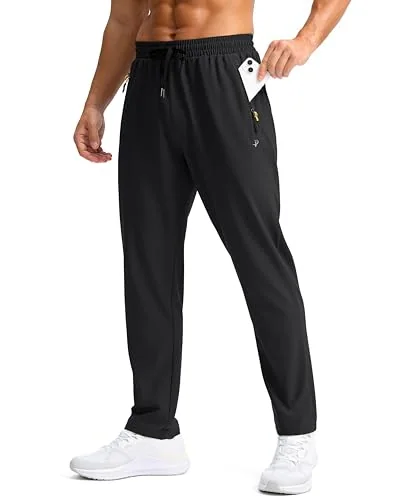
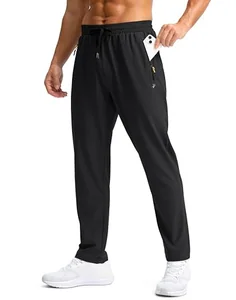
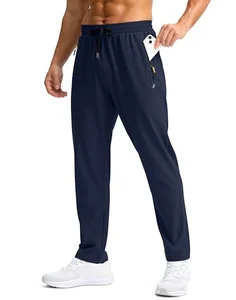
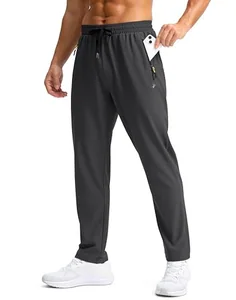
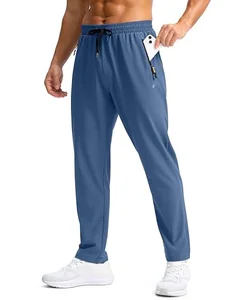
Woven or knit
Every pair of pants and shorts on this site is one of two things, and the difference decides everything about how it behaves on a trail. A knit is made of loops, like a tee: it stretches in every direction, it is soft, and it holds sweat. The sweatpants and joggers are knits. A woven is made of threads crossing at right angles, like a shirt or a pair of chinos: it does not stretch unless spandex is spun into the yarn, it holds a crease, it takes a belt, and it dries faster than a knit of the same weight because there is less fabric in it. The hiking shorts, the golf pants and the cargo pants are wovens.
On a trail the woven wins for three reasons. It sheds a bush, where a knit catches. It dries on the walk after a stream crossing. And its pockets can be built flat and zipped, because the fabric does not sag around what is in them. The knit wins on the drive home and on the sofa, and the Pudolla sweatpants bench is there for that half of the day. This guide is about the woven half: what the shell does with water, where the pockets sit, how long the leg should be, and what the public guidance says about the legs on a hike.
Water resistant, waterproof, neither
The three words on a label mean three different things, and on this site two of them are the maker's words, printed as such. No claim is a plain woven: it wets through in rain and dries in an hour of sun. Water resistant, where the maker says so, means the shell has a finish that makes a shower bead and roll for a while before it soaks. Sitting on a wet rock goes through it like any woven. Waterproof is a claim about the shell and its seams, and on this site it is the maker's claim, printed as given, with nothing added.
| The label | Pages on the two benches | What it does | What it is for |
|---|---|---|---|
| No claim | 118 | a woven that dries fast | a dry day, or rain you can walk out of |
| Water resistant, per the maker | 252 | a shower beads off for a while and then soaks | a shower, a wet bush, a splash |
| Waterproof, per the maker | 26 | a claim about the shell, with no test report published | a wet day with a shell on top as well |
The team's rule for the mountains is that no pair of pants is the rain layer. A rain layer is the shell in the pack, and the pants are what the shell goes over. The water resistant pairs earn their word on a morning of showers between trees. The pair with no claim earns its place by drying first when the sun comes back.
The finish that makes water bead wears off with washing. A pair that beaded when new and does not after twenty washes is not broken, it is a plain woven now, and a wash-in re-proofer brings the bead back for a while. That is not a Pudolla product and the page does not sell one.
The pocket that does not swing
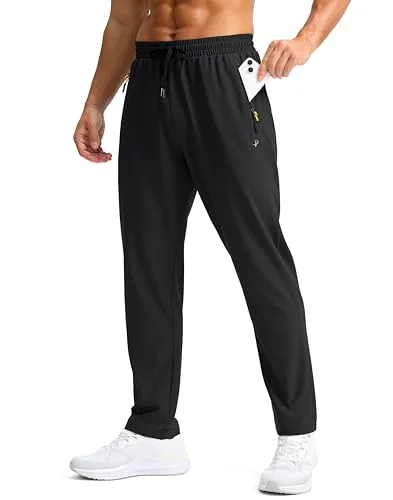
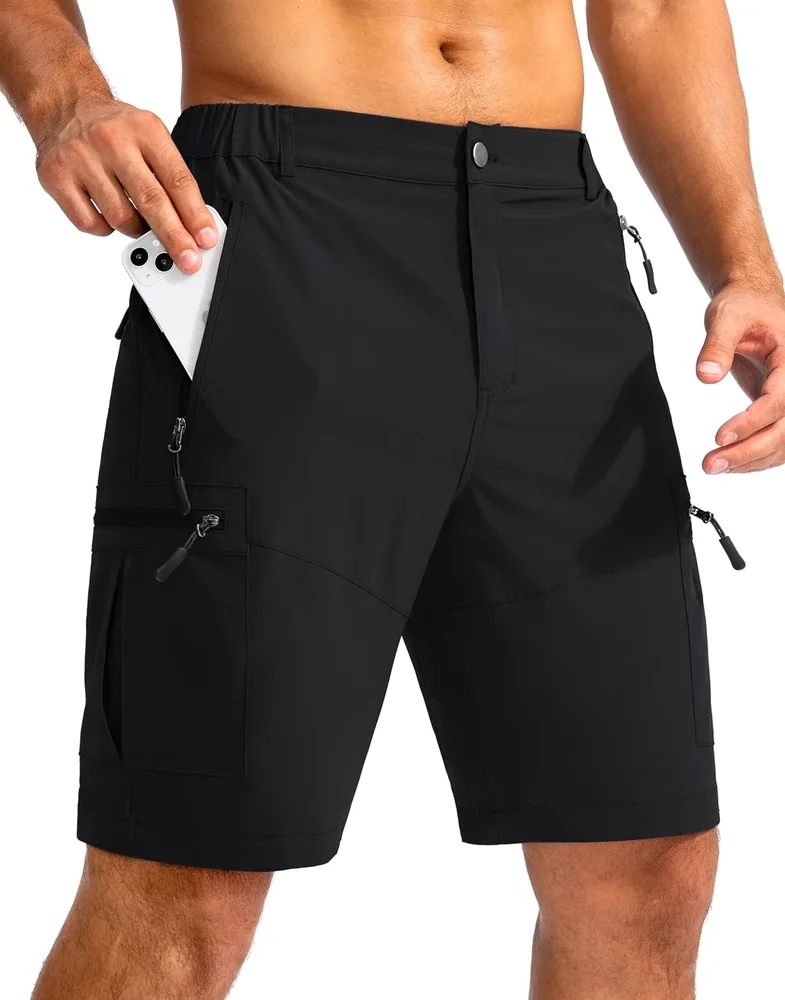
The pocket is where the studio argument always starts. A phone in a pocket that swings is the thing you feel on every step of a descent, and a cargo pocket that holds a full bottle is a pendulum. The Pudolla lineup places the thigh pocket where a hand falls when the arm hangs, cut it to lie flat, and close it with a zip, so a phone and a folded map ride against the thigh and do not move.
| What fits | On a descent | Where it is on the bench | |
|---|---|---|---|
| Slash pockets at the front | a hand, a phone on the flat | swing on a descent | golf and casual pairs |
| Zip pockets on the hip | phone, card, key | hold still | hiking pairs, joggers |
| Thigh pocket, zipped, flat | phone, map, bar | hold still if it lies flat | cargo pairs |
| Thigh pocket, bellows | a bottle, and it swings | swing | some cargo pairs; the page says which |
The rule for what goes where: the phone in the zipped thigh pocket or the zipped hip pocket, a bar and a key in the hips, and the bottle on a belt or in the pack. A pocket is not a bottle holder, however large it is, and the pages say so where a pair has a bellows pocket that would take one.
Count the pockets on the card. Three means slash pockets and one at the back, and five means two thigh pockets added. Seven means the pair is built for a day out and reads as a work pant in town. The count is on the card and in the label table on every page.
Shorts to the knee, pants to the boot
How long the leg should be is a question of the ground and the day, and the two benches cover the whole range from a 5 inch short to a full pant. The 5 and 7 inch hiking shorts are for heat and steep ground, where the knee has to come up on every step. The 9 inch pair is the one most people wear, a hand above the knee, with the thigh pocket in reach.
The 11 and 13 inch golf shorts cover the knee and read as a plain short in town. The women's cargo capri sits just below the knee. And full pants cover the whole leg, which matters for three things: brush, sun and ticks.
| Length | For | The knee | Pages |
|---|---|---|---|
| 5 to 7 inch shorts | hot days, steep ground | knee free | 87 |
| 9 inch shorts | most days | a hand above the knee | 92 |
| 11 to 13 inch shorts | the knee covered, golf, town | knee covered | 49 |
| Capri, women's | below the knee, five pockets | calf free | 14 |
| Full length pants | brush, ticks, sun, cold | the whole leg | 133 |
How long the day should be is the other length, and the National Park Service puts a number on the climb.
If any of your hike, in either direction, is uphill, plan for it to take at least double the time it took you to go downhill.
National Park Service, Hike Smart, read 6 September 2026
A good rule of thumb is that if you can talk while you are walking, you are traveling at the perfect speed.
National Park Service, Hike Smart, read 6 September 2026
Double the downhill time is the number the studio plans by, and it is the reason the pocket matters. On a four hour day the phone is in the thigh pocket for four hours, and a pocket that swings for four hours is the one thing you will remember about the trail.
Long pants and the tick question
The plainest reason to wear a full pant on a trail through grass is not the cold. It is what lives in the grass. The public guidance on ticks starts with the trail and moves to the clothing, and every line of it is about the legs.
Walk in the center of trails.
Centers for Disease Control and Prevention, Preventing Tick Bites, read 6 September 2026
Treat clothing and gear with products containing 0.5% permethrin.
Centers for Disease Control and Prevention, Preventing Tick Bites, read 6 September 2026
Repellents, netting, long pants, and sleeved clothing are the best ways to protect yourself from insect bites.
National Park Service, Hike Smart, read 6 September 2026
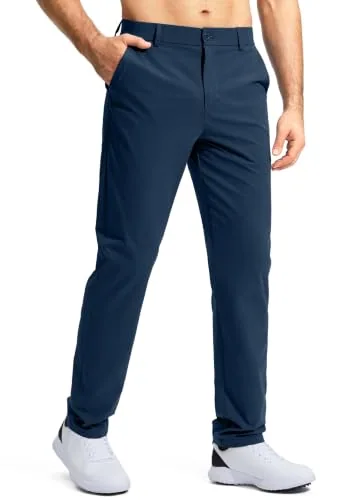
A pair of long pants tucked into a sock is a wall between the grass and the skin. A light woven pair in a pale colour does two more things: it shows a tick before it reaches the waist, and it dries fast enough that wearing a full pant on a warm day is not a punishment. The hiking and travel pairs on the pants bench are that pair.
Permethrin is a treatment you buy and apply yourself, following the label. No pair on this site comes treated, and the pages do not say otherwise.
The guidance goes on to what happens at home, and it is a laundry instruction.
Tumble dry clothes in a dryer on high heat for 10 minutes to kill ticks on dry clothing after you come indoors.
Centers for Disease Control and Prevention, Preventing Tick Bites, read 6 September 2026
Ten minutes on high heat for the ticks, and then the usual care: cold wash, hang. A polyester woven takes ten hot minutes without harm. Do not leave it in for an hour, because the hour is what shortens the life of the elastic and the water finish.
The layer you carry and do not wear
The pants you wear are half the plan for the legs. The other half is in the pack, and the National Park Service lists it with the map and the water.
Pack an extra layer of clothing that reflects the most extreme conditions you could encounter.
National Park Service, Ten Essentials, read 6 September 2026
Use bright clothing to make yourself easier to see in case Search and Rescue needs to look for you.
National Park Service, Ten Essentials, read 6 September 2026
For the legs on a summer day in the mountains that extra layer is a pair of light pants over the shorts, or a thermal tight under them, and a rain shell over all of it. The running tights on the sweatpants bench are the under layer: a close knit the maker calls thermal, with three zip pockets, that packs to the size of a fist. The fleece-lined pants on the same bench are the winter answer and do not pack small.
On colour: the sun bench and the trail benches lean dark because dark absorbs sun and hides mud, and the guidance on being seen is the argument for the one bright piece in the pack. A bright shell or a bright shirt does the job; the pants can stay dark.
Waist in inches, inseam in inches
The woven pants on this site are sized the way jeans are: a waist in inches and, where the maker gives it, an inseam in inches, so 34W x 32L is a 34 inch waist and a 32 inch inseam. The hiking and travel pairs with an elastic waist use letter sizes and run a little loose. Every page prints the size it is, and the size row links the other sizes of that colour, each with its own price.
To check: lay a pair you own flat, measure across the waistband, double it. For the inseam, measure from the crotch seam to the hem on the inside of the leg. A pant you will belt over a base layer in winter wants one waist size up. A short you will wear all day wants the larger of two sizes. The size guide has the rest, bench by bench.
The two benches, counted
The pants bench holds 133 pages and the hiking shorts bench 263 at the last update, every size of every colour counted. The sweatpants bench, the knit half, holds 248. Here are the pairs the trail chapter keeps coming back to.
From the bench
Pieces this chapter is about
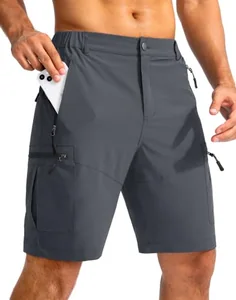
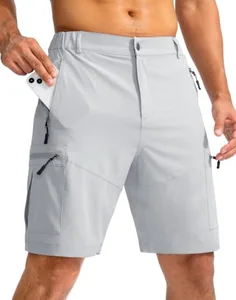
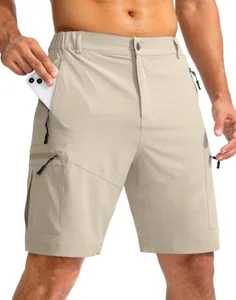
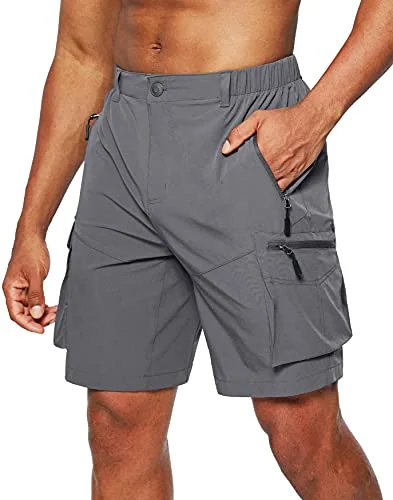
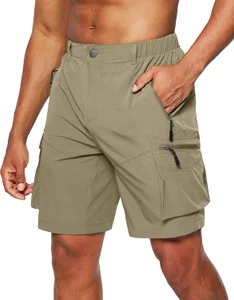
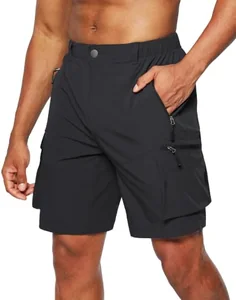
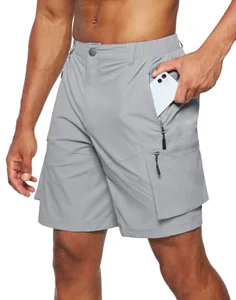
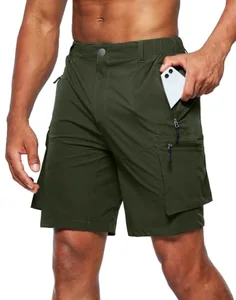
The filters on each bench work on the facts in this guide: who it is for, the inseam, the colour, the size, and whether the pair is water resistant by the maker's word.
Golf, work and the plane
Half the pants bench never sees a trail, and that is by design. The golf pants are the dressiest woven Pudolla makes: a flat front, belt loops, a waist in inches, and a stretch shell that reads as a chino across a desk and dries like a sports shirt after a round in the rain. They are the pair the team wears to an office, and the reason the pants bench has a fleece-lined golf pair for January is that the office is still there in January.
The cargo and tactical pairs go the other way, toward a site rather than a course. A tougher woven, seven pockets, a waist that takes a belt with a tool on it, and the maker's water resistant or waterproof word on most of them.
They are the pair for a day of kneeling and climbing where a plain chino would tear at the knee. They are also the pair that goes up a trail with a map in the thigh pocket on Saturday, because the same seven pockets do both jobs.
The travel pants sit between the two, and the plane is what they are for. A light woven with an elastic waist and a drawstring sits still for a six hour flight, dries overnight in a hotel bathroom, and does not hold a crease.
The zip pocket on the hip holds a passport against the body on a train platform. The Pudolla travel pairs are the ones the studio packs when the trip is a plane, a city and a trail in the same three days, and the pockets are the reason.
The women's cut on this bench is the cargo capri, and it does the plane and the trail in one pair. Five pockets, a light woven, and a hem just below the knee that keeps the calf free on a climb and passes at a table afterwards.
Care, and the finish that wears off
A woven pant is easier to keep than a knit and harder to keep than it looks. Cold wash, zipped, turned inside out, and hung by the waist: that is the whole routine, and it is the same for every pair on both benches. What changes is what wears off.
The water resistant finish on the pairs that have one is a coating on the outside of the yarn, and every wash takes a little of it. A pair that beaded when new and wets through after a season is not a defective pair. It is a plain woven now, and a wash-in re-proofer from any outdoor shop brings the bead back for a while.
The stretch is the other thing that goes. A woven with a few percent of spandex spun into it gives at the knee on a step and comes back, and after enough hot washes it comes back less. Cold water keeps the spandex alive, and so does staying out of the dryer. The tick guidance on this page says ten minutes on high heat after a walk through grass, and ten minutes is fine. An hour is what kills the stretch and the finish together.
Mud comes out of a woven if it dries first. Brush it off dry, then wash. A wet pair scrubbed on the trail drives the mud into the weave, and a pale pair scrubbed wet keeps the mark. Blood from a scraped knee comes out in cold water and stays in hot. The team learned both of those the way everyone does, on a pair it liked.
The zips are the working part of a cargo pair, and they take sand and grit on a descent. Rinse a gritty zip under a tap and run the slider a few times before it dries. A zip that has stuck shut on a pocket with a phone in it is a pocket you will cut open, and the studio has done that once and does not recommend it.
What a trail pant is not
It is not a rain shell. Water resistant sheds a shower. Waterproof is the maker's claim. The rain layer is the one in the pack.
It is not insulated unless the page says fleece-lined, and a fleece-lined pair is warm because it is thick, not because it is technical.
It is not tick-proof. Long pants tucked into socks and a permethrin treatment you apply yourself are what the guidance describes. A pair of pants on its own is a wall, not a repellent.
It is not a promise about your size. The size row on the page shows what exists in that colour today.
Packing the legs for a day out
- Woven on the trail, knit in the car. A hiking short or a pair of pants for the walk, sweatpants for the drive home.
- Length by the ground. Heat and steep: 5 or 7 inch. Most days: 9. Grass, brush and ticks: full pants, tucked into socks.
- Phone in the zipped pocket. Thigh or hip, flat and zipped. The bottle goes on a belt.
- One extra layer for the legs in the pack: tights under or light pants over, and a rain shell over everything.
- Plan the climb at double the downhill time, and walk at the pace you can talk at.
- Ten minutes on high heat in the dryer when you get home, then cold wash and hang.
Sources
- Hike Smart, National Park Service, read 6 September 2026.
- Ten Essentials, National Park Service, read 6 September 2026.
- Preventing Tick Bites, Centers for Disease Control and Prevention, read 6 September 2026.
Before you go